Business Details
We aim to provide you the emergency service you require to rid you of all types of pests ASAP! Call us today and we can give you the best advice on how to tackle the issue at hand with a great price. We also specialise in services for businesses which aim to prevent you suffering any financial loss and keep you up and running.
Services
About
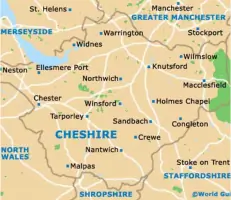
Complete Pest Control was established in 2014 by David Dicken who lives and operates in Cheshire.
David was introduced to pest control at an early age by his father.
They would frequently visit farms together to combat pest problems via trapping and other techniques.
He continued to increase his knowledge from his earlier years and today has over 30 years experience.
David is BPCA (British Pest Control Association) trained and RSPH (The Royal Society for Public Health) Level 2 certified in pest control management so you can be assured we know what we are doing.
What We Do
All Complete Pest Control Technicians are BPCA (British Pest Control Association) trained, RSPH (The Royal Society for Public Health) Level 2 certified in pest control management and fully compliant in the latest health and safety legislation.
This qualifies them to undertake all aspects of insect, rodent and mammal pest control for residential, commercial and industrial premises in Cheshire.
Pest Control Technician David provides a fast, effective and friendly pest control service using only licensed and professional pest control products which comply with all United Kingdom and European legislation.
Commercial
Our bulk of work comes from businesses and call outs to companies from which we have found that if the problem does not get sorted quickly, then the business could lose thousands of pounds a day.
This is why it is imperative to talk to us about a plan where we do an incremental check throughout the year and stop any persisting problems.
This is why it is imperative to talk to us about a plan where we do an incremental check throughout the year and stop any persisting problems.
Proofing
There are many key elements to look at for the effective management of the multitude of pests out there.
The first emphasis should always be on prevention.
Here at Complete Pest Control we aim to avoid or limit the use of pesticide treatments where this is possible and to achieve cooperation through prevention.
A proactive approach to pest control is the most effective strategy.
Don't wait until you have a crisis.
Good housekeeping, pest proofing, and monitoring are the best ways to prevent rodent problems.
Ants
Ants are eusocial insects of the family Formicidae and, along with the related wasps and bees, belong to the order Hymenoptera.
Ants evolved from wasp-like ancestors in the Cretaceous period, about 99 million years ago and diversified after the rise of flowering plants.
More than 12,500 of an estimated total of 22,000 species have been classified.
If you are having a problem with Ants within your home or business, then don't hesitate to call us here at Complete Pest Control immediately so we can alleviate the problem at source.
Bed Bugs
Bed bugs are parasitic insects of the cimicid family that feed exclusively on blood.
Cimex lectularious, the common bed bug, is the best known as it prefers to feed on human blood.
Other Cimex species specialize in other animals, e.g., bat bugs, such as Cimex pipistrelli (Europe), Cimex pillosellus (western US), and Cimex adjunctus (entire eastern US).
The name bed bug derives from the preferred habitat of Cimex lectularius: warm houses and especially near or inside beds and bedding or other sleep areas.
Bees
Bees are flying insects closely related to wasps and ants, known for their role in pollination and, in the case of the best-known bee species, the European honey bee, for producing honey and beeswax.
Bees are a monophyletic lineage within the superfamily Apoidea, presently considered as a clade Anthophila.
There are nearly 20,000 known species of bees in seven to nine recognized families, though many are undescribed and the actual number is probably higher.
They are found on every continent except Antarctica, in every habitat on the planet that contains insect-pollinated flowering plants.
Beetles
The word coleoptera is from th Greek, koles, meaning "sheath"; and, ptern, meaning "wing", thus "sheathed wing", because most beetles have two pairs of wings, the front pair, the "elytra", being hardened and thickened into a shell-like protection for the rear pair and the beetle's abdomen.
The order contains more species than any other order, constituting almost 25% of all known animal life-forms.
About 40% of all described insect species are beetles (about 400,000 species), and new species are discovered frequently.
The order contains more species than any other order, constituting almost 25% of all known animal life-forms.
About 40% of all described insect species are beetles (about 400,000 species), and new species are discovered frequently.
Cockroaches
The cockroaches are an ancient group, dating back at least as far as the Carboniferous period, some 320 million years ago.
Those early ancestors however lacked the internal ovipositors of modern roaches.
Cockroaches are somewhat generalized insects without special adaptations like the sucking mouthparts of aphids and other true bugs; they have chewing mouthparts and are likely among the most primitive of living neopteran insects.
They are common and hardy insects, and can tolerate a wide range of environments from Arctic cold to tropical heat.
Crows
Corvus is a widely distributed genus of medium-sized to large birds in the family Corvidae.
The genus includes species commonly known as crows, ravens, rooks and jackdaws; there is no consistent distinction between "crows" and "ravens", and these appellations have been assigned to different species chiefly on the basis of their size, crows generally being smaller than ravens.
Ranging in size from the relatively small pigeon-sized jackdaws (Eurasian and Daurian) to the common raven of the Holarctic region and thick-billed raven of the highlands of Ethiopia, the 45 or so members of this genusoccur on all temperate continents except South America, and several islands.
Fleas
They are externa parasites of warm-blooded animals, living by heamtophagy off the blood of mammals and birds.
The adults are up to about 3 mm (0.12 in) long and usually brown.
They are flattened sideways to enable them to move through their host's fur or feathers, and have strong claws to prevent themselves from being dislodged.
They are wingless insects, with mouthparts adapted for piercing skin and sucking blood and hind legs adapted for jumping.
They can leap a distance of some 50 times their body length, a feat second only to jumps made by froghoppers.
Foxes
Foxes are small-to-medium-sized, omnivorous mammals belonging to several genera of the family Canidae.
Foxes are slightly smaller than a medium-size domestic dog, with a flattened skull, upright triangular ears, a pointed, slightly upturned snout, and a long bushy tail (or brush).
If you are having a problem with Foxes within your home or business, then don't hesitate to call us here at Complete Pest Control immediately so we can alleviate the problem at source.
Gulls
Gulls, often referred to as seagulls, are seabirds of the family Laridae in the suborder Lari.
They are most closely related to the terns (family Sternidae) and only distantly related to auks, skimmers, and more distantly to the waders.
Until the 21st century, most gulls were placed in the genus Larus, but this arrangement is now known to be polyphyletic, leading to the resurrection of several genera.
If you are having a problem with Gulls within your home or business, then don't hesitate to call us here at Complete Pest Control immediately so we can alleviate the problem at source.
Magpies
Magpies are birds of the Corvidae (crow) family, including the black and white Eurasian magpie, which is considered one of the most intelligent animals in the world, and the only non-mammal species able to recognize itself in a mirror test (though a recent study suggests that giant manta rays can also recognize their own reflection.
In addition to other members of the genus Pica, corvids considered as magpies are in the genera Cissa.
If you are having a problem with Magpies within your home or business, then don't hesitate to call us here at Complete Pest Control immediately so we can alleviate the problem at source.
In addition to other members of the genus Pica, corvids considered as magpies are in the genera Cissa.
If you are having a problem with Magpies within your home or business, then don't hesitate to call us here at Complete Pest Control immediately so we can alleviate the problem at source.
Mice
A mouse (plural: mice) is a small rodent characteristically having a pointed snout, small rounded ears, a body-length scaly tail and a high breeding rate.
The best known mouse species is the commonhouse mouse (Mus musculus).
It is also a popular pet.
In some places, certain kinds of field mice are locally common.
They are known to invade homes for food and shelter.
Domestic mice sold as pets often differ substantially in size from the common house mouse.
This is attributable both to breeding and to different conditions in the wild.
Moles
Moles are small mammals adapted to a subterranean lifestyle (i.e., fossorial).
They have cylindrical bodies, velvety fur, very small, inconspicuous ears and eyes, reduced hindlimbs and short, powerful forelimbs with large paws adapted for digging.
The term "mole" is especially and most properly used for "true moles" of the Talpidae family in the order Soricomorpha found in most parts of North America, Asia, and Europe although may refer to other completely unrelated mammals of Australia and southern Africa that have also evolved the mole body plan; it is not commonly used for some talpids, such as desmans and shrew-moles, which do not quite fit the common definition of "mole".
Moths
Moths comprise a group of insects related to butterflies, belonging to the order Lepidoptera.
Most lepidopterans are moths; and there are thought to be approximately 160,000 species of moth, many of which are yet to be described.
Most species of moth are nocturnal, but there are also crepuscular and diurnal species.
If you are having a problem with Moths within your home or business, then don't hesitate to call us here at Complete Pest Control immediately so we can alleviate the problem at source.